
1-Contrary to human rights
The death penalty is first and foremost an infringement of the right to life – a fundamental right enshrined in several international conventions.
Everyone has the right to life, liberty and security of person
Universal Declaration of Human Rights, Article 3
Every human being has the inherent right to life. This right shall be protected by law. No one shall be arbitrarily deprived of his/ her life
International Covenant on Civil and Political Rights, Article 6
Each State Party shall take all appropriate measures to abolish the death penalty within its jurisdiction.
Second Optional Protocol to the International Covenant on Civil and Political Rights (OP2), Article 1 – the only international treaty providing for total abolition.
2 – Not a deterrent
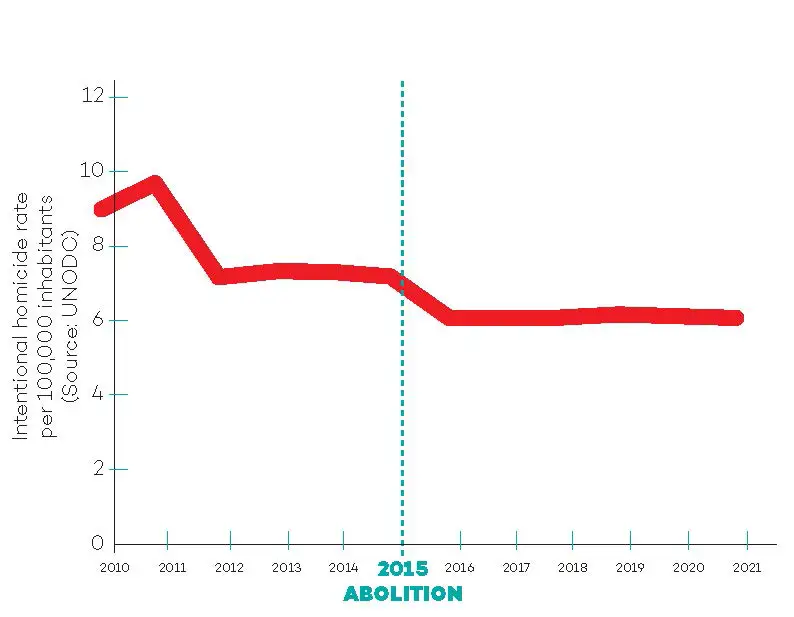
AMONG THE 20 SAFEST COUNTRIES IN THE WORLD*, 16 HAVE ABOLISHED THE DEATH PENALTY
According to the Global Peace Index 2025
The death penalty is ineffective in combating crime and does not make societies safer.
There is no scientific consensus that the death penalty has a more dissuasive effect on crime
than other penalties. Social, economic and judicial factors play a more decisive role in reducing crime.
Most criminologists agree that the most serious crimes are often committed in the heat of the moment, impulsively, or by people who are not thinking about the legal consequences of their actions.
3 – Revenge not justice

The death penalty perpetuates a cycle of violence and suffering, whereas justice aims to repair society.
While the desire for revenge is human, it is an emotional, immediate and individual reaction. In contrast, a court decision must be impartial, considered and collective. The use of the death
penalty is rooted in the most common interpretation of the ancient law of retaliation, summed up by the phrase “an eye for an eye, a tooth for a tooth.”
An eye for an eye will leave everyone blind
Mahatma Gandhi
4 – Irreversible
Miscarriages of justice exist – the death penalty kills innocent people around the world.
A lack of resources, expertise and independence of law enforcement and justice systems are among the main causes of wrongful convictions. Numerous cases show how the death penalty leads to irreversible errors. Iwao Hakamata’s story has become a global symbol. Sentenced in Japan for
a crime he always denied, he spent over 46 years in solitary confinement on death row, the longest case ever recorded. Released in 2014, he was definitively
exonerated in 2025.
Justice is rendered by fallible humans. Nothing will ever prevent miscarriages of justice.
Robert Badinter, ECPM Honorary President
5 – Torture
From arrest to execution, the death penalty process is inevitably marked by physical and psychological suffering, both for those sentenced to death and for their loved ones.
This suffering can amount to torture or cruel, inhuman, or degrading treatment, prohibited by numerous international and regional legal instruments
.
- At arrest: In Cameroon, 24 different methods of torture, used to break and humiliate arrested individuals have been documented
- During investigation: In Egypt, numerous death row prisoners report having been tortured repeatedly to extract confessions
- During detention: Death row syndrome refers to the psychological suffering caused by the wait and uncertainty surrounding execution. In Uganda, this period of waiting has been ruled unconstitutional when it exeed three years.
- At execution: Painful and humiliating methods of execution have been recognised as torture and therefore uncontrary to international law. To date, no method has been proven to be painless and respectful of human dignity.
6 – Discriminatory

Discrimination exists in law and in
practice.
It may be enshrined in law (in grounds for conviction), or inherent in legal proceedings. In many countries, the quality of the defence and verdict are greatly affected by the accused’s financial means. It may also be affected by the gender, sexual orientation, race, skin colour, religion or ethnic background of the accused or their witnesses, lawyers, etc. As a result, marginalised and
vulnerable groups are disproportionately represented on death row.
- India: 74% of people sentenced to death are economically vulnerable – (Project 39A)
- Saudi Arabia: 42% of executions for “terrorism” – related offences between 2014 and 2025 involved members of the shia minority – (Amnesty International)
- USA: 38% of those sentenced to death in 2024 were black – (Death Penalty Information Center)
- Iran: 19% of people executed between 2022 and 2024 were from the baloch minority – (Iran Human Rights)
- Kenya: 2/3 of death row prisoners interviewed had not received education beyond primary school – (The death penalty project)
Comparison with proportion of the general population:
The Baloch population represents 4% of the Iranian population; the Shia population represents 11% of the Saudi Arabian population; Black people represent 14% of the US population; and 1/3rd of Kenyans do not receive education beyond primary level
As of 2024, Homosexuality was punishable by death in 12 countries.
7 – A tool of political repression

The death penalty is used as a tool of oppression, repression of the population and diplomatic leverage.
In some countries, merely expressing an opinion can lead to a death sentence. Capital punishment is often used as a tool to exert diplomatic pressure, with foreign nationals on death row being used
as bargaining chips.
Iran : More than 10,000 poeple were executed between 2008 and 2025. Widespread use of the death penalty is one of the regime’s main tools to instill fear in society.
8 – Traumatic

The death penalty creates other victims.
From arrest to execution, suffering and trauma extend to the families and loved ones of those sentenced to death. Some of the system’s actors, including lawyers, jurors, judges, prosecutors, executioners and prison staff, may also experience
psychological trauma.
Some people treat us as if aren’t from a good family. I know that my children have struggled at school since their father has been behind bars.
Anna, wife of a death row prisoner in Malaysia
The post traumatic stress associated with the responsability of killing human beings and the difficulty processing one’s own physical contribution to the detah of another must never be ignored.
Aramis Ayala, State Attorney, Florida, USA
9 – An obstacle to the truth
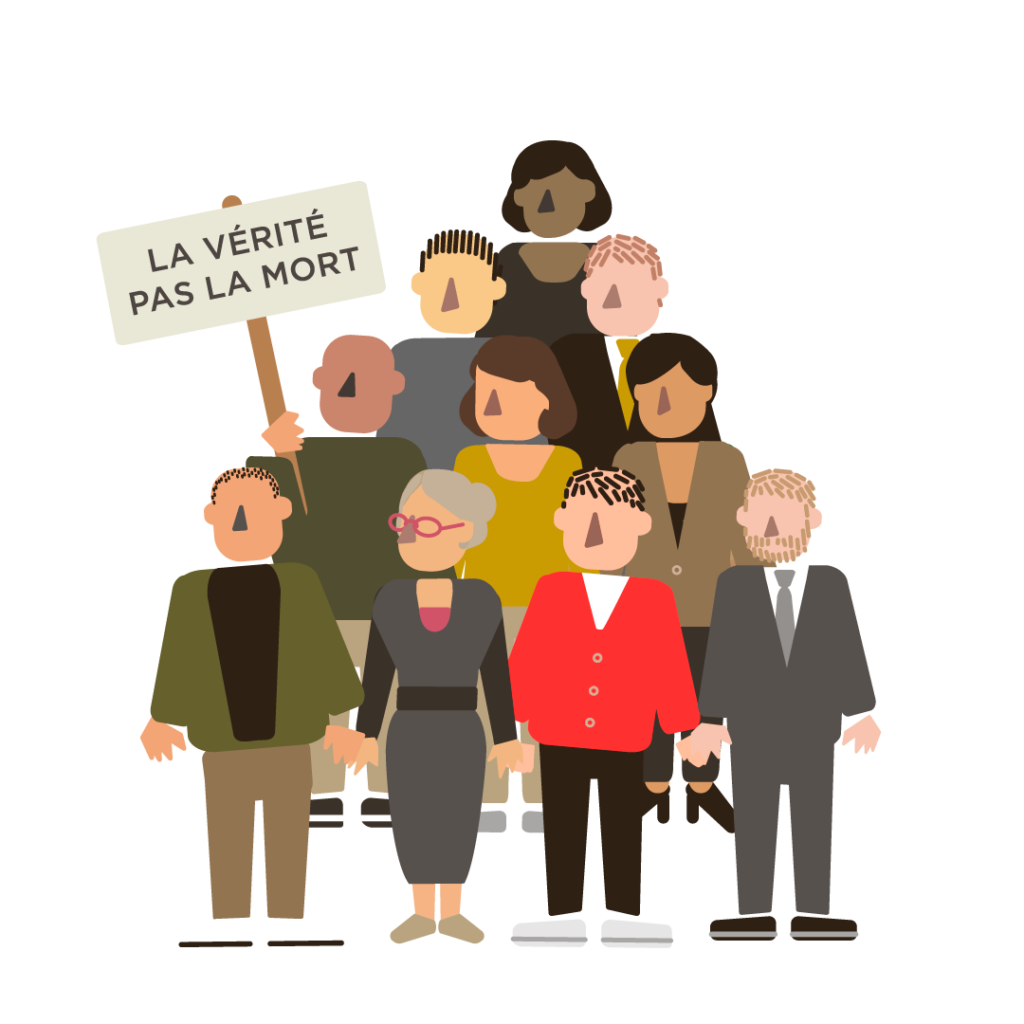
The right to the truth is the right to know the absolute and whole truth about the offences committed, the circumstances surrounding them,
the people involved and their motives. Because the justice system is fallible, the death penalty is a major obstacle to the right to the truth.
Not all victims’ families support the death penalty, nor does it guarantee reparation.
I won’t be at the trial on Monday, I don’t have the courage. But I want justice to be done, I want remorse, apologies… I’m still opposed to the death penalty, even for my son’s killer… I want to know what was going through that terrorist’s mind.
Khadija Arfaoui, Tunisian academic and mother of a victim of a terrorist attack
10 – Incompatible with rehabilitation
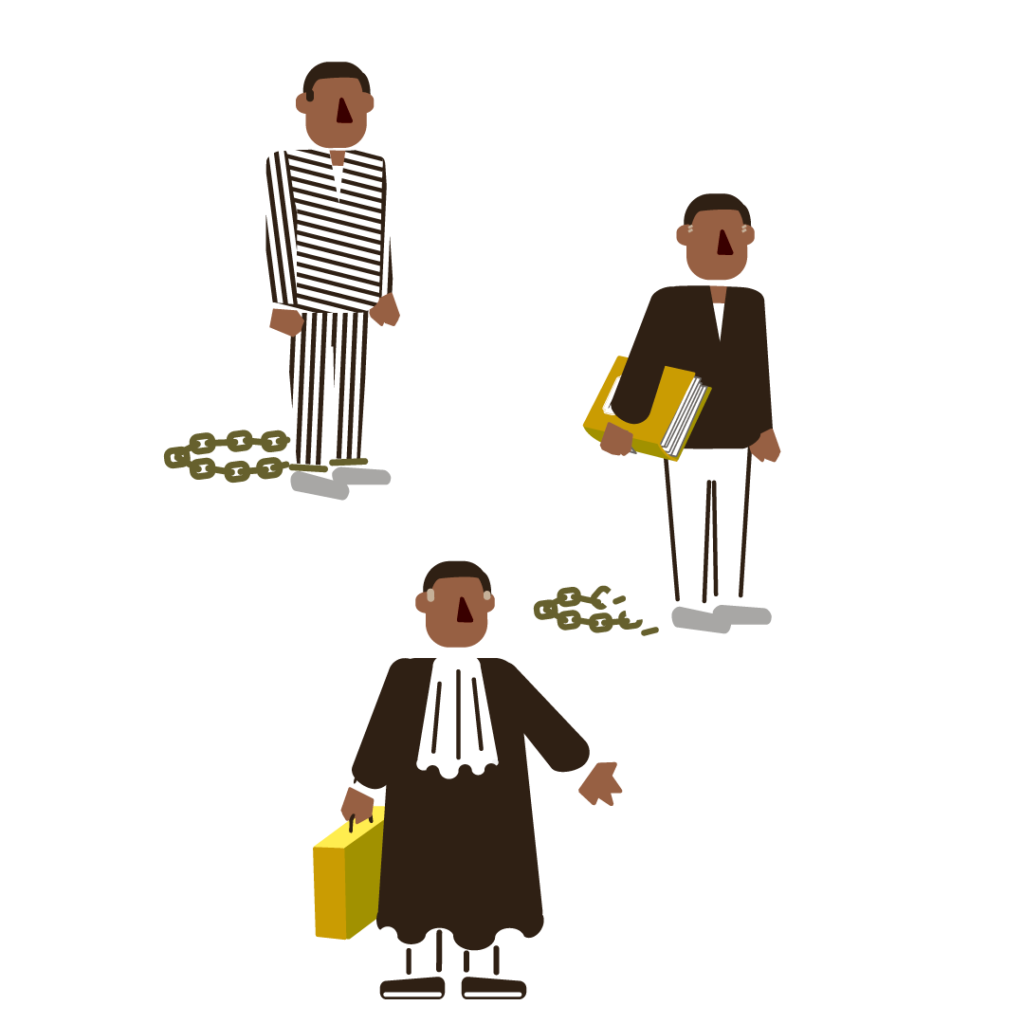
The death penalty denies the principle of a second chance.
Yet one of the objectives of justice is to rehabilitate and reintegrate the perpetrators of offences, in order to restore balance and peace in the community.
I spent 18 years on death row. After my release, I got a law degree and founded an association defending prisoners’ rights in Africa.
Pete Ouko, former death row prisoner, Kenya